
You know it’s going to be an interesting workshop when Taylor Swift’s song lyrics, Agatha Christie’s detective novels, Douglas Adams’ Hitchhiker’s Guide to the Galaxy, Studio Ghibli’s My Neighbor Totoro and the medieval manuscripts of Notker the German are all referenced already in the opening session. And SiNoSi’s recent kick-off event in Konstanz did not disappoint. The discussions and conversations which unfolded over the course of the two-day programme proved to be as wide-ranging and eclectic as this varied assortment of cultural artefacts suggested.
What connects these disparate cultural figures is also what unites all those involved in SiNoSi’s ambitious new research enterprise: a deep-seated appreciation of the fact that silence and noise can be meaningful after all. As SiNoSi’s spokesperson Miriam Butt also emphasised in her opening speech, an interest in different kinds of silence and noise — and the non-trivial role these play in human language — has long been the common denominator shared across the team of linguists at the University of Konstanz. It is of course the driving idea behind SiNoSi, a grand project which has now emerged from years spent discussing the interesting and varied deviations from the idealised Saussurean form-meaning pairing (see our last Substack post for more on Saussure and the core idea behind SiNoSi).
I’ve never heard silence quite this loud
(Taylor Swift, The Story of Us, 2011)
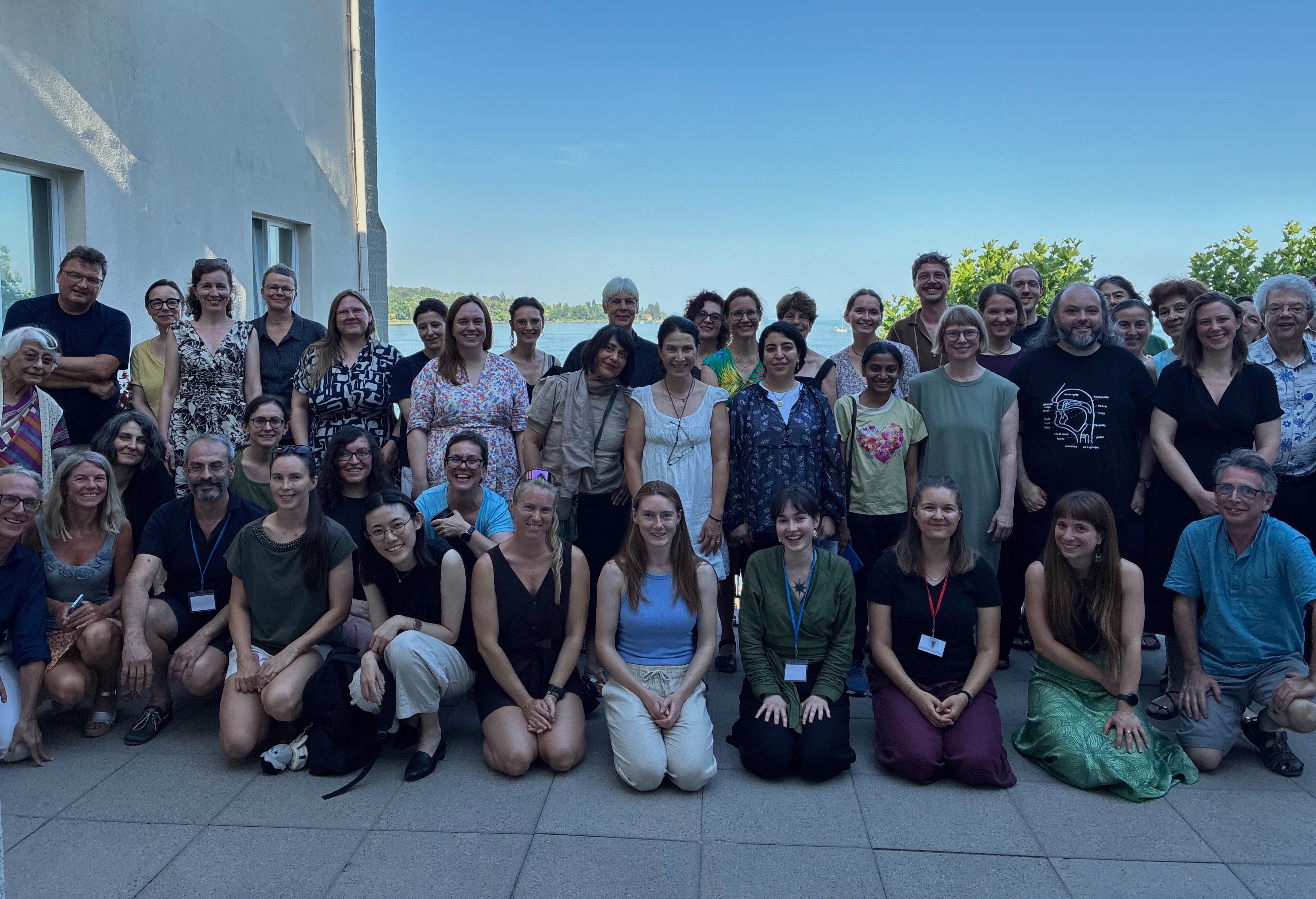
If the talks and cultural references were wonderfully varied, so too were the workshop presenters and attendees. Gathered together in the palatial, lakeside setting of the Steigenberger Inselhotel were researchers spanning diverse disciplines and theoretical traditions, as well as the full spectrum of seniority — from those looking back on long, impressive careers to those excitedly at the very beginning of their own. A good few of those present were familiar faces in Konstanz but many were new; a major benefit of a Collaborative Research Centre like SiNoSi is the chance to bring in new talent and expertise. The kick-off workshop was thus an important opportunity to put faces to names and projects, and to start knitting together the various collaborations to come.
Across the two days, representatives of each of the seventeen projects had a chance to present their corner of SiNoSi, and to set out their ambitious research plans for the coming months and years. Those in attendance were taken on a tour of a dazzling array of linguistic varieties (from Punjabi, Tamil and Kurdish to Corsican, Basque, Greek, Polish and Old Saxon) and encountered the broadest possible range of methods — including experimental tasks, computational modelling, visual analytics, corpus studies, EEG-tests and eye-tracking.
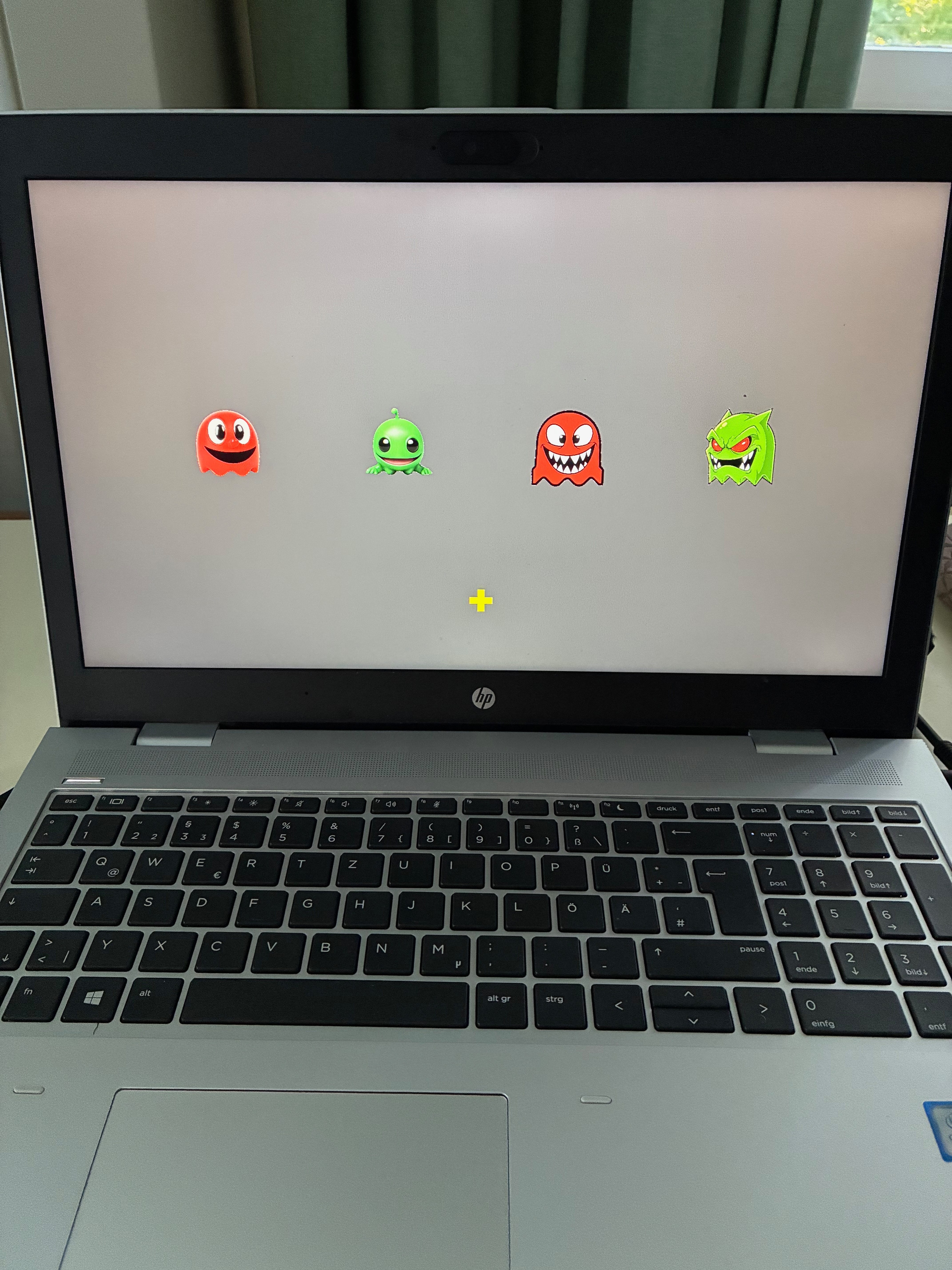
A number of the projects on display also went beyond linguistics, in line with SiNoSi’s interdisciplinary nature. We heard about plans to investigate silence and noise in social media, Large Language Models and refugee centres, as well as in the popular games Werewolf and Among Us. There was much excitement at the announcement that the new language lab bus would soon be hitting the road to conduct mobile experiments with speakers from the widest possible range of backgrounds. And for those who couldn’t wait to sample SiNoSi’s research up-close, a live demo of an intriguing experimental set-up featuring some colourful, extraterrestrial characters was also on offer.
A particular buzz surrounded the talks given by three of SiNoSi’s Mercator Fellows, who will each be on hand to lend their specialist expertise to the research centre. Maria (Masha) Polinsky (University of Maryland) talked about silent negation in exceptive constructions, and described the tricky task of looking for silence as being “like looking for a black cat in a dark room — you’re not even sure it’s there”. The talk was a fascinating walk-through of what it’s like to be chasing these black cats through highly complex and subtle linguistic data — an experience that many across SiNoSi’s projects are themselves now facing up to. As Polinsky warned those listening intently, just as there are cases where silence “looks impossible but we see it’s there”, there are equally cases where “we really want silence, but what we think is there is actually not there”.
Charles Yang (University of Pennsylvania), another of the Mercator Fellows, shared perspectives on the theme of noise, via his recent work on bridge verbs with Jiayi Lu (Northwestern University) and Julie A. Legate (University of Pennsylvania). He characterised generalisation under uncertainty and exceptions as “the problem in machine learning and cognitive science” and described it as one he had himself been thinking about for a long time. The talk also touched on what the role of theoretical linguists should be in this current age of Large Language Models — an issue that was no doubt at the back of the minds of many of those in the room, especially after the talk given by Annie Zaenen (Stanford University) on a similar theme earlier in the week.
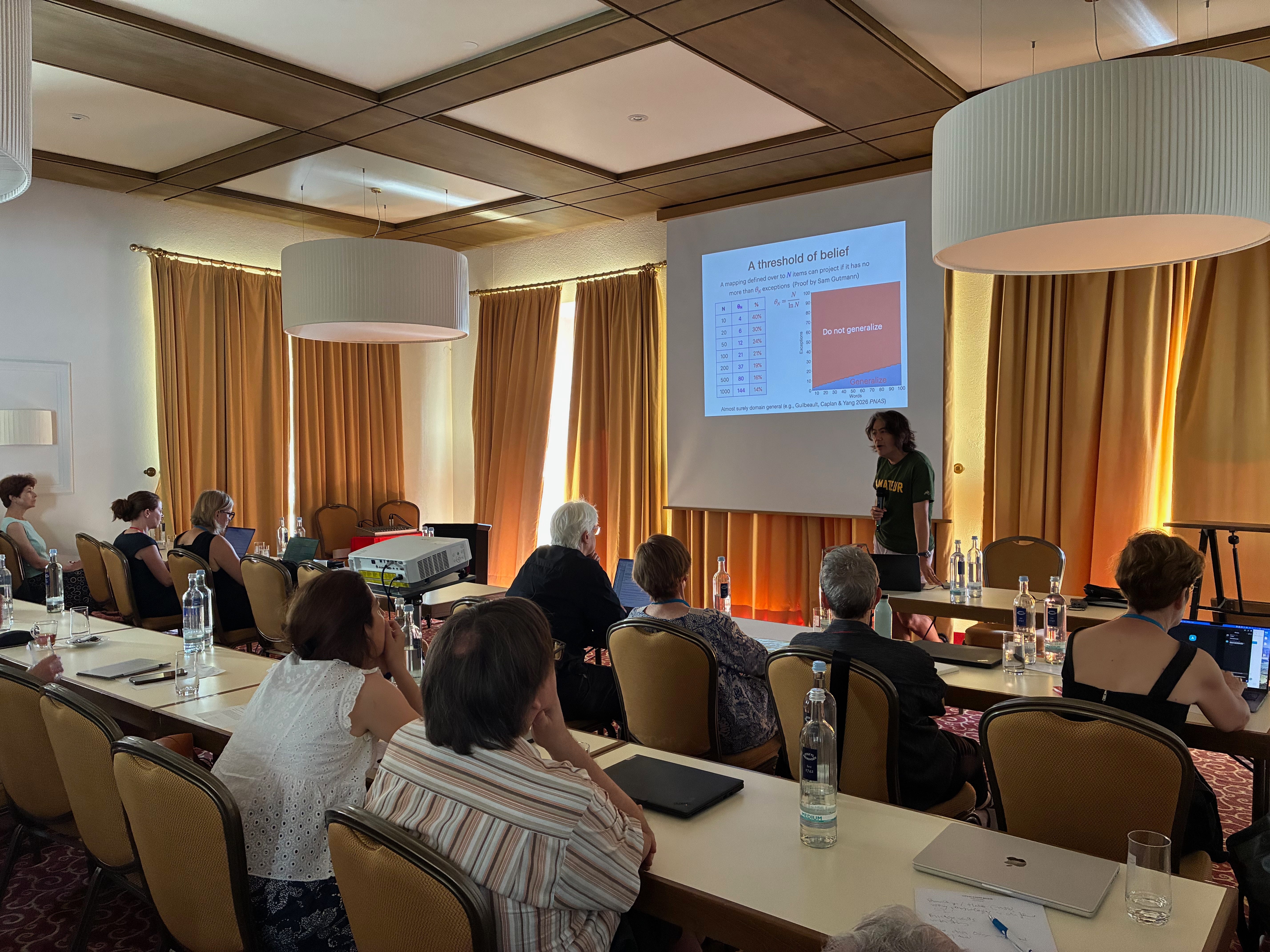
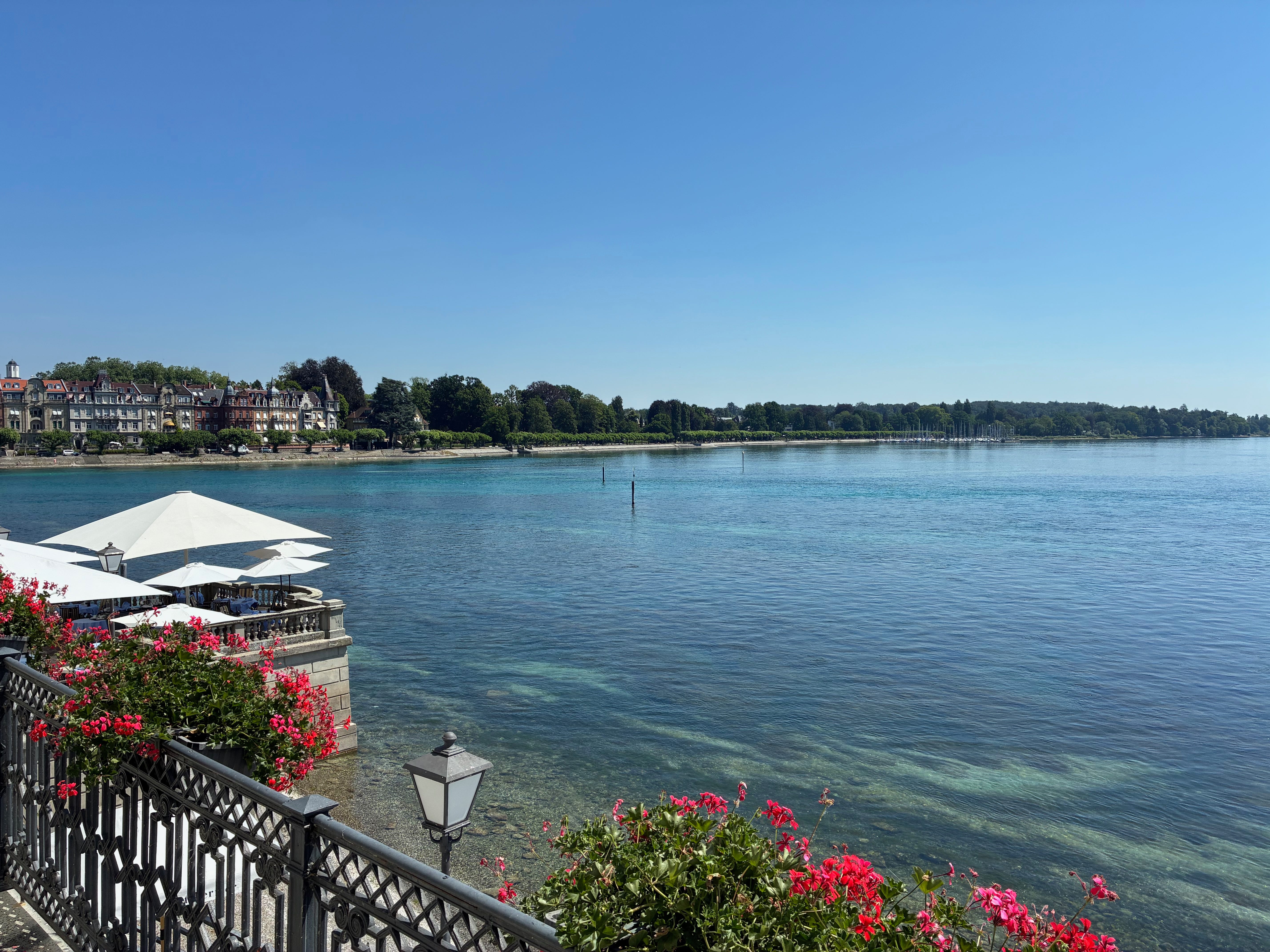
A phonetician’s view of noise was offered by the third Mercator Fellow present at the workshop, Petra Wagner (Bielefeld University), who introduced the audience to what she described as the phonetician’s “riddle”: the need to filter out what is part of the signal and what is actual noise. She emphasised the importance of acquiring linguistic data from more naturalistic settings — such as at the morning breakfast table, where noise is in plentiful supply, some of it indeed meaningful, but some of it “real noise”. Rather appropriately, Wagner was herself interrupted on several occasions by the noise of a loud signalling horn from a ship passing by on the lake just the other side of the hotel balcony. From the ship’s captain, it was impeccable timing — it’s almost as if he or she knew what was being earnestly discussed just a few metres away on dry land.
The lake and the linguistics department at Konstanz has a habit of drawing people back and so it was no surprise that several former colleagues had returned to celebrate the launch of SiNoSi. Aditi Lahiri (University of Oxford) gave a talk about noise in abstract phonological representations, drawing attention to pertinacity as a characteristic of grammars — where a pattern persists over time but its realisation changes. Meanwhile, María Biezma (UMass Amherst) and Adriana Hanulíková (Heidelberg University) also returned to their former linguistics home to share perspectives on silence and noise from their own recent research.
At least in the German context, we appear to be living in somewhat of a golden age when it comes to large-scale research funding for linguistics, and representatives from two other ongoing Collaborative Research Centres were also on hand to share their research and experiences so far. Chiara Boila and Irene Mognon (Goethe University Frankfurt) each presented their work from Negation in Language and Beyond (SFB 1629), which has been going since 2024. Mognon’s conclusion from her work on processing implicatures was that “deriving meaning from silence may not be as costly as generally assumed” — something she hoped could be further verified in the future, with the help of SiNoSi’s own research.
Likewise, Britta Stolterfoht and James Griffiths (University of Tübingen) gave a talk about their Collaborative Research Centre Common Ground: Cognition - Grammar - Communication (SFB 1718), up and running since 2025. The goal there is to develop a new unified theory of Common Ground – an essential ingredient in any joint action, and yet a famously slippery concept. The new theory will be strongly informed by linguistic work, but will be rigorously put to the test across an impressive range of domains, from political discourse and literary texts to communication behaviour in great apes.
Stolterfoht and Griffiths were keen to emphasise the many points of crossover between the Tübingen and Konstanz research enterprises, and highlighted many opportunities for mutually beneficial collaboration — chances to learn more about Common Ground by studying silence and noise, and vice versa. Stolterfoht’s advice for those embarking on the first year of the SFB? “Focus on the cooperation between the various projects from the very beginning — and don’t lose sight of the connection to the big overarching concept.”
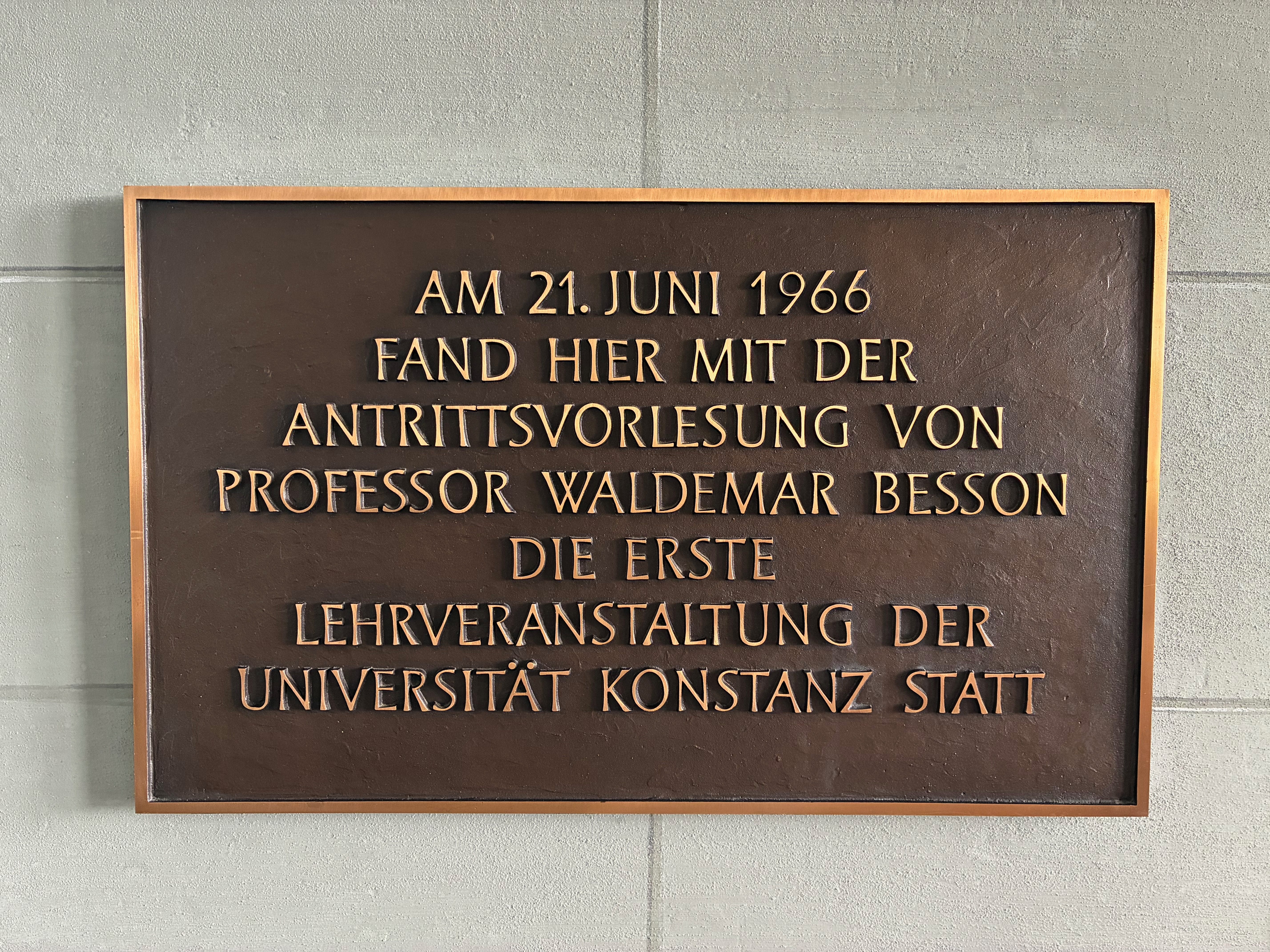
It’s sound advice for the various SiNoSi members in Konstanz now embarking on their own, deeply interconnected research projects. No doubt the many fruitful conversations which took place at the kick-off workshop will serve as important inspiration in the coming weeks, as no doubt will memories of the workshop location too. The Steinberger Inselhotel was, after all, the site of the very first lecture to take place at the University of Konstanz in June 1966, nearly 60 years ago to the day.
Now that it’s full steam ahead with SiNoSi in this, the university’s 60th anniversary year, there is every reason to look forward to the next chapter in the story of Konstanz linguistics!