


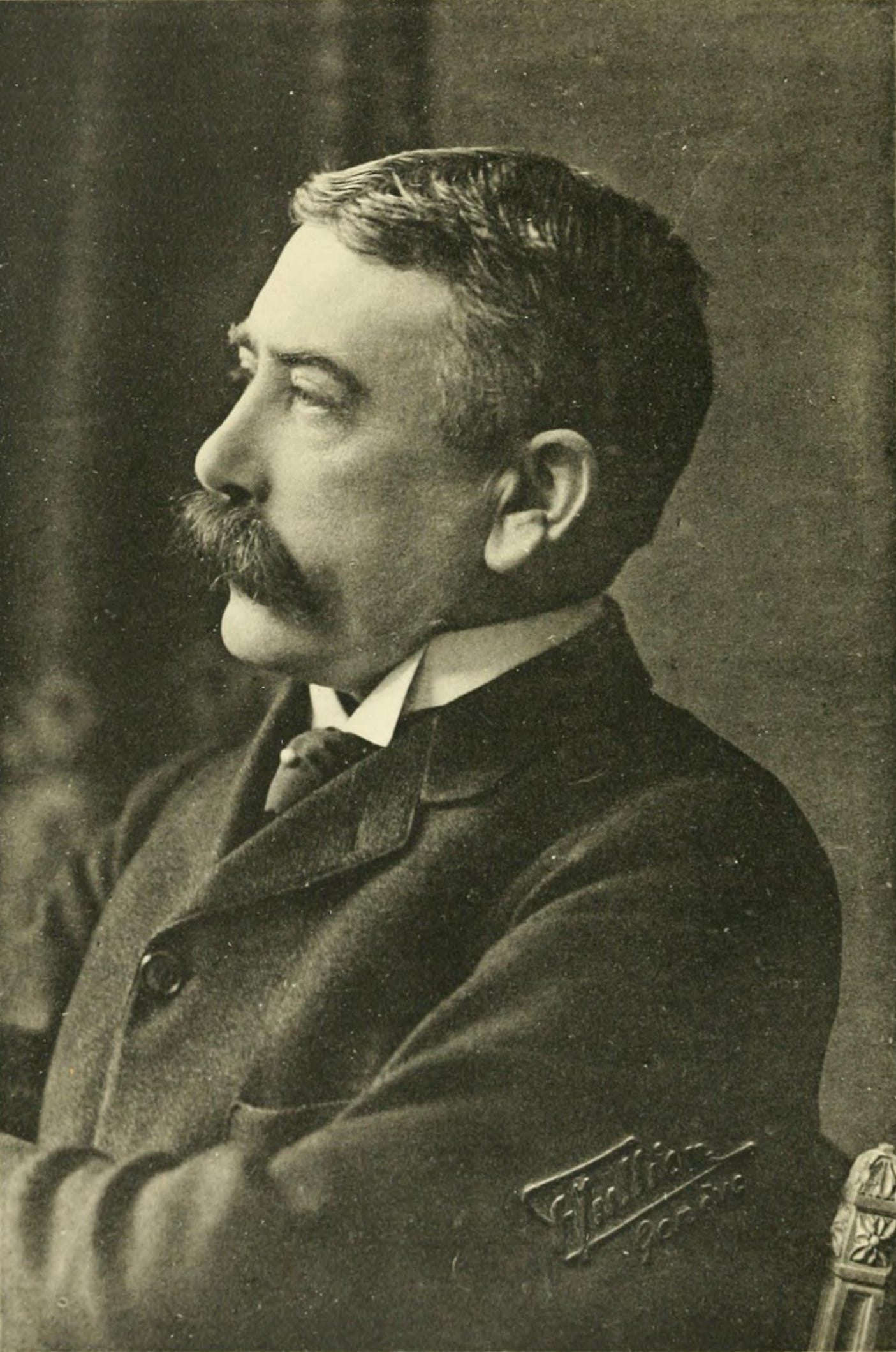
Every so often in the academic world, a new idea comes along that sets the tone for decades to come. In the early twentieth century, Ferdinand de Saussure’s conception of language as a structured system of signs did just that. Developed in a series of lectures de Saussure gave towards the end of his career between 1906 and 1911, in his home city of Geneva, the idea was that languages consisted of a set of mental associations or signs, each pairing a form with a meaning — a signifier with the signified.
de Saussure never formally published his theory of signs, and reportedly destroyed his draft lecture outlines once they’d served their original purpose. So it fell to two of his junior colleagues, Charles Bally and Albert Sechehaye, to assemble the hastily scribbled lecture notes of de Saussure’s former students into something more enduring.
The result was Course in General Linguistics, a modestly sized book first published in 1916, three years after de Saussure’s death, and translated, republished and reprinted in dozens of editions ever since. The thought that one’s lecture notes could ever serve to shape the future development of a whole academic field should bring a shudder to current students far and wide.

Today, over a century later, the Saussurean ideal of language as a system of tight form-meaning pairs still looms large in theoretical linguistics, despite murmurs and rumblings from pretty much all directions. For things are rarely as straightforward as they first appear, as any researcher is all too well aware.
In fact, a great deal of linguistic research over recent decades has been devoted to phenomena which challenge the Saussurean ideal — real language data in all its fuzzy, complex glory. Ambiguous forms and meanings inferred from context, apparent rule violations and noisy data, the gradual nature of language change and the undeniable reality of sociolinguistic variation: all these messy deviations have been attracting the attention of linguists for some time, precisely because they muddy the waters that run through much thinking behind modern linguistics.
Consider, for instance, the common deployment of silence in conversation. We’ve all encountered the pregnant pause — a momentary absence of linguistic material, yet one we still recognise as loaded with meaning and speaker intent. Or equally the various types of noise we routinely and successfully filter out in communication. Even when this noise upsets familiar linguistic patterns, we can still often make out what’s being said — a capacity famously exploited by a certain humanoid character in the Star Wars films:
Named must your fear be before banish it you can.1

Well known such phenomena may be and yet, as with any dominant research paradigm, breaking out of it takes a good deal of ambition, no matter what the data have been telling us for years. The brand-new Collaborative Research Center Silence, Noise and Signal in Language at the University of Konstanz (SiNoSi for short) promises to place these challenging complexities at the forefront of a bold new research programme.
Up and running since April 1st 2026, SiNoSi sets out from a distinct starting point: that, far from being inconvenient quirks, silence and noise are in fact essential characteristics of human language — and key to how we perceive, learn and produce linguistic signals. In other words, common and long-recognised linguistic phenomena — often viewed as beyond the scope of core theories and models — will get the theoretical attention they deserve over the coming years, at the German university perched on a hill overlooking Lake Constance.

The ultimate goal is to come up with a way to model what could be called the fibreglass aspect of language: the fact that it is resilient, and yet at the same time highly flexible. It is a paradox that continues to elude the various theoretical models of language currently on offer (even over a century on from de Saussure’s system of signs), and poses a research challenge only a sustained, collaborative effort can hope to resolve.
SiNoSi’s fresh approach to the issue is captured in a central hypothesis: that the fibreglass aspect of language comes about from our dynamic exploitation of silence and noise — how we enrich the unsaid, and filter the said. Like the composition of fibreglass, this linguistic flexibility relies on a complex system of relations, spanning the full gamut of linguistic dimensions from pronunciation and intonation through to word order, sentence structure and different types of meaning.
It is this system that SiNoSi will seek to pin down as part of a new, overarching Algorithm of Interpretation, which should have far-reaching consequences for many areas of scientific inquiry — how language is learned, produced and perceived, as well as how and why it changes over time.


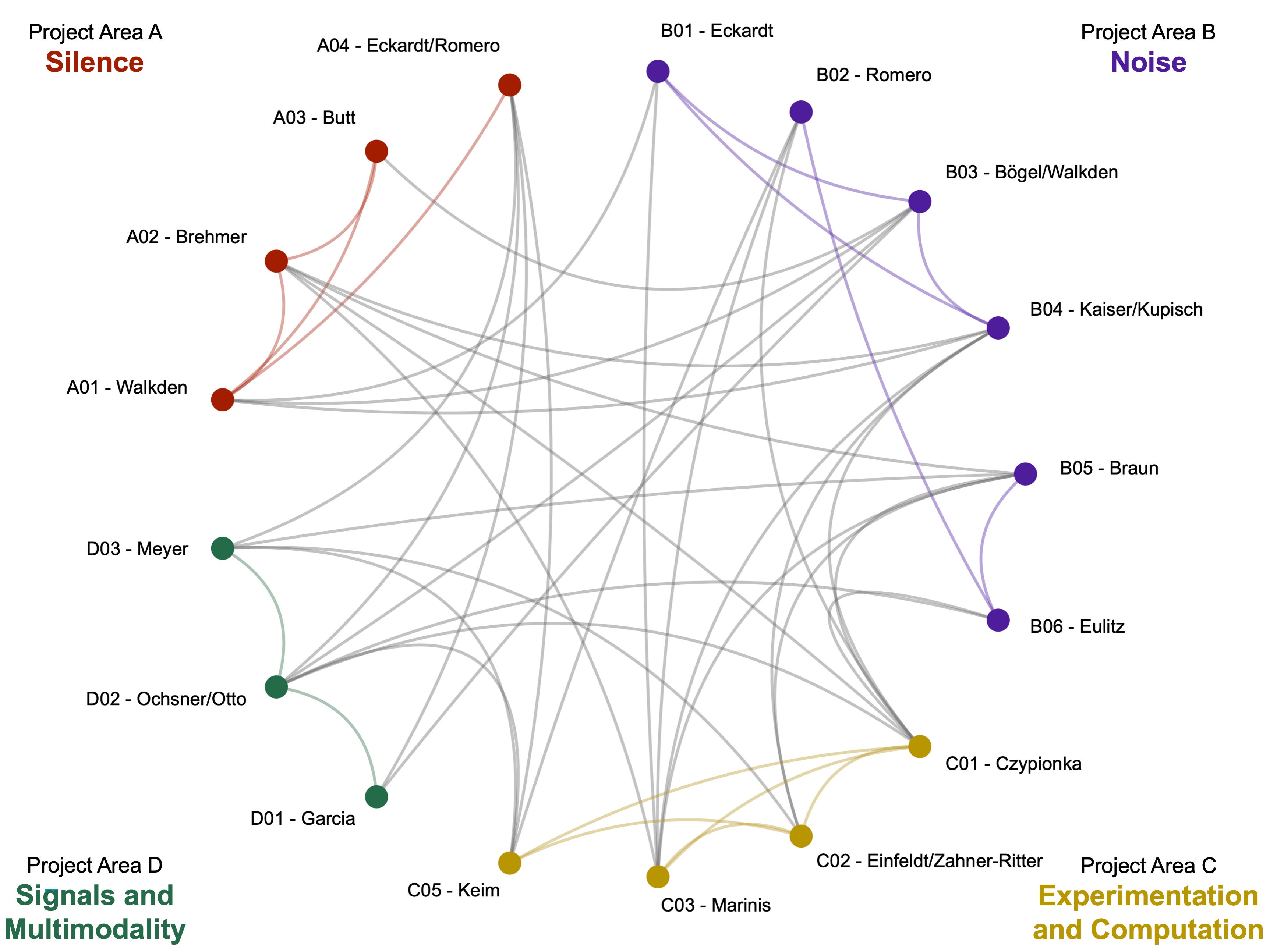
Human communication is of course an interdisciplinary phenomenon, and so SiNoSi brings together researchers not just from linguistics but also from literary studies, computer science, sociology and beyond. It’s a dizzying array of projects, interlinked in SiNoSi’s own complex web spanning four project groups — silence and noise, as well as experimentation & computation, and signals & multimodality.
Like many groundbreaking innovations, the invention of fibreglass was born of an accidental discovery in 1932 — a chance coming together of people and possibilities. Over the coming months and years, there should be plenty of opportunities for serendipity to work its magic at SiNoSi’s lakeside home, where faces familiar and new are gearing up for an exciting few years of experiments, collaborations and discoveries.
This week already sees a two-day workshop taking place on the role of sociocognitive factors in multilingual communication settings — a chance to share early insights on all four project areas. And at the end of June, SiNoSi’s members and international collaborators will gather all together in Konstanz for the first time, at an official kick-off workshop amidst the long summer days and hopefully some warm sunshine.
And some more good news too: SiNoSi’s activities and insights will be chronicled right here on Substack as we go along, meaning that — unlike in Geneva in the early twentieth century — our own student note-takers can rest easy and concentrate on their studies!

A line from Yoda in Star Wars: The Empire Strikes Back